Profit from Friction: How Ryanair Turned Inconvenience into a Billion-Euro Asset
How Ryanair engineered the perfect sales funnel to turn bargain hunters into big spenders, using nothing more than psychology, timing, and unapologetic upsells.
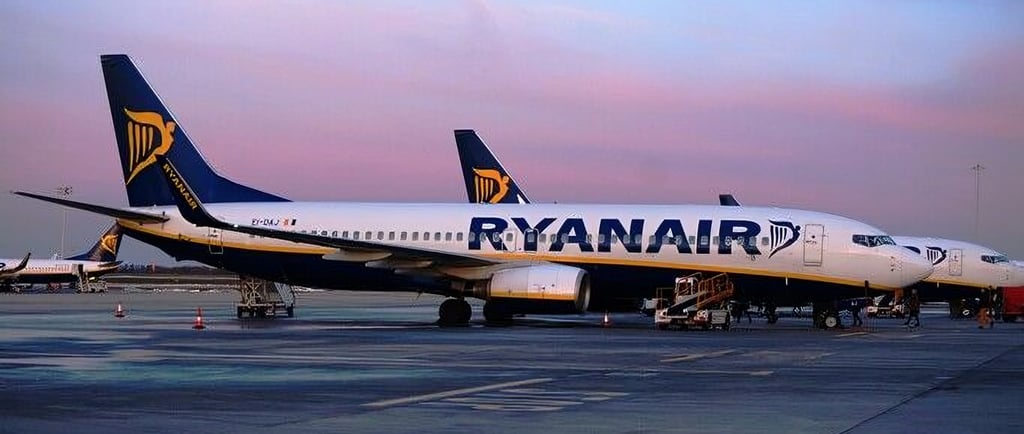
We’ve all been there. You’re scrolling through a travel site, and you see it: a flight to Barcelona for €19.99. It costs less than a taxi to the airport. You click "Book" immediately.
Fast forward twenty minutes: you’ve paid for a seat (so you don’t get stuck in the middle), you’ve added a cabin bag (because who travels with just a toothbrush?), and you’ve coughed up for priority boarding. The final price? €85.
You feel slightly cheated, yet you book it anyway. Why?
It’s not just "hidden fees." You have just been subjected to a masterclass in behavioral psychology known as the Low-Ball Technique. Here is how Ryanair uses a specific psychological architecture to turn bargain hunters into high-margin profit generators.
The Trap: What is the "Low-Ball"?
The "Low-Ball" is a persuasion tactic famously documented by social psychologists. The premise is simple: secure a commitment to a request at an attractive price, then reveal hidden costs or remove benefits after the commitment is made.
Ryanair’s entire business model is an industrial-scale application of this technique.
Phase 1: The Bait (Cost Leadership)
Ryanair doesn't really sell "hospitality"; they sell a commodity. Their relentless cost-cutting allows them to dangle a "loss leader", that €19.99 fare. This isn't just a price; it's a stimulus designed to stop you from looking at competitors like British Airways or Lufthansa.
The Psychological Trick: Anchoring. When you see €19.99, your brain "anchors" on that number. Even as costs are added later, you continue to perceive the flight as "cheap" relative to the anchor, even if the final price is standard market rate.
Phase 2: The Lock-In (Commitment & Consistency)
Once you select that flight and start typing your name, something shifts in your brain. You are no longer looking for a flight; you are booking a flight.
The Psychological Trick: Consistency Principle. Humans have a deep desire to be consistent with their past actions. By clicking "Select," you make a small commitment. Backing out later feels like admitting a mistake or being "fickle." Ryanair knows that once you enter the sales funnel, you are statistically unlikely to leave.
Phase 3: The Squeeze (The Sunk Cost Fallacy)
Ryanair’s booking flow is designed to utilize Drip Pricing. You don't see the full cost at once; it drips in, drop by drop.
Seats: +€12
Bags: +€20
Fast Track: +€8
By the time you reach the baggage page, you’ve invested 5-10 minutes entering passport details and selecting dates. If you baulk at the baggage fee now, you have to scrap the whole process and start over elsewhere. This triggers the Sunk Cost Fallacy; you pay the extra fees just to "save" the time you’ve already invested.
Monetizing Friction: The "Random" Seat Algorithm
One of the most controversial aspects of this strategy is how Ryanair monetizes inconvenience. Take seat allocation.
A few years ago, families could often sit together for free. Then, passengers started noticing they were being split up, often placed in middle seats, rows apart, even on empty flights.
An investigation by Oxford University statisticians found that the odds of a group of four being randomly split into middle seats across four flights was 1 in 540,000,000.
The Strategy: Ryanair artificially creates a problem (separation anxiety) and then sells you the solution (reserved seating). They aren't selling you a better seat; they are selling you the absence of friction.
The Results: A Billion-Euro "Switch"
Does it work? The numbers are staggering. In Fiscal Year 2024, Ryanair didn't just break even; they posted a profit after tax of €1.92 billion.
But here is the key metric: Ancillary Revenue. Ryanair made €4.30 billion just from "extras": bags, seats, and priority boarding. On average, every passenger spends about €23.40 on top of their ticket price. That initial €19.99 fare is just the hook; the real money is made in the upsell.
The Takeaway
Ryanair isn't just an airline; it's a behavioural economics experiment. They filter for price-sensitive customers using controversy and low fares, then use cognitive biases to maximize the yield from every seat.
Next time you find yourself raging at a €60 "gate bag fee" or paying to avoid a middle seat, remember: it’s not bad luck. It’s a perfectly executed psychological sales funnel. And the fact that we keep flying them suggests that, perhaps, the low-ball is the most effective marketing tool in the sky.